Retro Animal Print & Retro Animal Print: Timeless Patterns for Modern Digital Design
Patterns have a remarkable way of anchoring us to a specific era while also feeling completely fresh when reimagined. Among the most enduring and versatile pattern families is retro animal print—a bold, nostalgic take on classic leopard, zebra, tiger, and cheetah motifs that dominated mid-century fashion, interior design, and graphic art. Today, these iconic prints are experiencing a powerful resurgence, not just in clothing and home décor, but in the digital design world. Whether you are a photographer looking for a striking backdrop, a graphic artist building a brand identity, or a content creator aiming to stand out on social media, retro animal print backgrounds offer a unique blend of wild energy and vintage charm.
In this article, we will explore the allure of retro animal print, its practical applications across creative fields, and why investing in high-definition, premium-quality digital backgrounds can elevate your projects from ordinary to extraordinary. We will also unpack the technical specifications that matter—like 300 DPI resolution, 3600 x 3600 pixel dimensions, and PNG format—so you can confidently choose the right assets for your work. Let's dive into the world of bold patterns, vibrant colors, and timeless design.
What Makes Retro Animal Print So Captivating?
Animal prints have been a staple of human adornment for millennia, but the retro interpretation—think 1960s and 1970s palettes, exaggerated scale, and stylized shapes—brings a distinct personality. Unlike photorealistic animal patterns, retro versions often incorporate warmer, earthier tones, softer contrasts, and a hand-drawn or screen-printed feel. This gives them an approachable, artistic quality that feels both nostalgic and contemporary.
The appeal lies in the balance: they are bold enough to make a statement yet familiar enough to feel comfortable. Retro animal prints can evoke the glamour of vintage Hollywood, the free-spirited energy of the bohemian era, or the playful kitsch of mid-century decor. This emotional resonance is exactly what makes them so effective in digital design—they communicate personality, mood, and style instantly.
Why Digital Creators Are Turning to Retro Patterns
In a world saturated with minimalist and flat-design trends, pattern-rich backgrounds offer a refreshing alternative. They add texture, depth, and visual interest without requiring complex layering. A single high-quality retro animal print background can transform a simple text overlay into a captivating graphic, or turn a product photo into a lifestyle image that tells a story.
From website headers and social media templates to brochures, invitations, and digital scrapbooking, these patterns serve as a foundation for creativity. And because they are digital, they can be scaled, cropped, and customized infinitely—provided you start with the right resolution and format.
Key Insight: The best digital backgrounds are not just decorative—they are functional tools that save time, ensure consistency, and professionalize your output. Retro animal prints, when delivered in high resolution, become an asset you can rely on for years.
Inside the Collection: 12 High-Definition Retro Animal Print Images
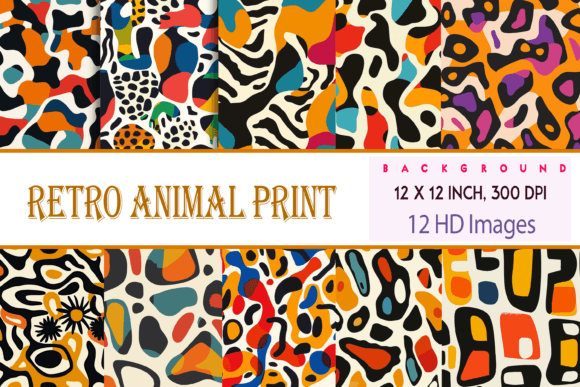
Imagine opening a file folder to find 12 distinct retro animal print designs, each one a vibrant, colorful interpretation of a classic pattern. That is exactly what this curated collection offers. Every image is crafted with care, ensuring that the retro aesthetic shines through while maintaining the precision needed for professional use.
Let's break down the specifications that define this collection and explain why each detail matters for your work.
PNG Format: The Gold Standard for Transparent Flexibility
Every background in this set is delivered as a PNG file. Why PNG? Because it supports lossless compression, meaning you get pristine image quality without artifacts. For designers, PNG files are ideal because they handle flat-color and patterned graphics exceptionally well. While these particular designs have a solid, non-transparent background (more on that below), the PNG format ensures sharp edges, consistent color, and no background noise.
If you ever need to layer text, logos, or other elements on top, the PNG format gives you a clean canvas that remains crisp even after multiple saves. It is the most versatile format for digital backgrounds that will be used across different software platforms—Photoshop, Canva, Illustrator, Procreate, and more.
Dimensions: 12” x 12” at 3600 x 3600 Pixels
Size matters, especially when you are working on projects that require large-format printing or high-resolution displays. Each design measures 12 inches by 12 inches, with a pixel dimension of 3600 x 3600. This square format is incredibly practical because it can be used as-is for social media posts, album covers, and packaging, or cropped to fit widescreen layouts without losing quality.
At 3600 pixels per side, you have enough data to print at sizes far larger than 12 inches—up to 24 inches or more—while retaining sharpness. For digital use, this resolution ensures that your backgrounds look flawless on Retina displays, 4K monitors, and mobile screens alike.
300 DPI Resolution: Print-Ready Quality
300 DPI (dots per inch) is the industry standard for professional printing. Magazines, brochures, posters, and product packaging all rely on this resolution to deliver sharp, detailed output. When a digital background is created at 300 DPI, it means every square inch contains enough data to reproduce smooth gradients, fine lines, and vivid colors on paper.
If you have ever tried to print a low-resolution image from the web, you know the disappointment of pixelation. With these 300 DPI backgrounds, you can confidently send files to a print shop or use them in book layouts, knowing the results will be museum-quality.
File Size: 10–20 MB per Design for Optimal Fidelity
File size is often misunderstood. Some people assume smaller is better, but in the world of high-resolution imagery, file size correlates directly with quality. Each design in this collection weighs approximately 10 to 20 megabytes. That range indicates rich color data, fine pattern detail, and no compression shortcuts. These files are optimized for quality, not for web-speed compromises. If you need smaller versions for quick previews, you can always downsample them—but starting with a full-fat file gives you the freedom to choose.
Vibrant, Colorful Designs with a Solid, Non-Transparent Background
One of the standout features of this collection is its vibrant color palette. Retro animal prints are known for their warm, inviting hues—think amber, rust, teal, mustard, and cream—and these designs deliver that richness in spades. The colors are saturated yet tasteful, making them suitable for both playful and sophisticated projects.
The backgrounds are solid and non-transparent, meaning the pattern covers the entire canvas edge to edge. This is a deliberate choice: it gives you a complete, ready-to-use backdrop without needing to fill or tile anything. You can drop these backgrounds directly into your design software, overlay text or images, and have a finished look in seconds.
Practical Applications: Where to Use Retro Animal Print Backgrounds
The versatility of these designs is one of their greatest strengths. Below are several real-world uses, organized by creative field, to inspire your next project.
For Photographers
- Portrait backdrops: Use a retro leopard or zebra print as a bold, textured background for fashion, lifestyle, or editorial shoots. The high resolution ensures that even full-body shots look crisp.
- Product photography: Place small products—like jewelry, cosmetics, or accessories—against a colorful animal print to create a premium, Instagram-worthy aesthetic.
- Digital backdrops for compositing: Because the files are high-res and non-transparent, you can composite subjects into scenes with realistic depth and color matching.
For Graphic Designers
- Brand identity elements: Use a subtle retro animal print as a pattern in brand guidelines, packaging, or website backgrounds. It adds character without overwhelming the brand message.
- Social media templates: Create consistent, eye-catching posts for Instagram, Facebook, or Pinterest by layering text over these vibrant backgrounds.
- Invitations and stationery: Birthday party invites, wedding signage, or event flyers get an instant upgrade with a retro pattern that feels curated and fun.
For Web and Digital Content Creators
- Website hero images: A full-screen retro animal print behind a headline can create an unforgettable first impression for lifestyle blogs, vintage stores, or creative agencies.
- Email marketing headers: Stand out in crowded inboxes by using a bold patterned header that aligns with your brand's personality.
- Video thumbnails and overlays: Use these backgrounds as a base for YouTube thumbnails, lower thirds, or intro animations.
For Educators and Students
- Presentation slides: Break away from boring templates by using a tasteful retro pattern as a slide background. It keeps audiences engaged and reinforces a creative topic.
- Visual aids and posters: Print these backgrounds at full size for classroom displays, science fair projects, or art history references.
How to Choose the Right Retro Animal Print for Your Project
With 12 distinct designs in the collection, deciding which one to use might feel daunting. Here is a simple framework to help you match the pattern to the purpose:
- Consider the mood. Warm tones (orange, brown, gold) feel nostalgic, cozy, and approachable. Cooler tones (teal, slate, muted green) feel sophisticated and modern. Choose accordingly.
- Think about scale. Larger patterns work well as bold statements on large surfaces (posters, website hero sections). Smaller, denser patterns are better for intimate applications like notebooks or business cards.
- Pair with contrast. Because these backgrounds are colorful, pair them with simple, neutral overlays—white, black, or cream text—to keep the composition readable.
- Test before committing. Download a sample if available, or test the background in your software with your typical text and image sizes. The 300 DPI and 3600 px dimensions give you plenty of room to adjust.
Why Quality Matters: The Difference Between Amateur and Professional Results
It is tempting to grab any free animal print image from the web, but the differences quickly become apparent. Low-resolution images look blurry when stretched, colors appear muddy, and the pattern may tile awkwardly. In contrast, professionally crafted digital backgrounds like this collection ensure:
- Clean, accurate colors that match your brand or vision.
- Sharp details at any size, from mobile screens to billboard prints.
- Consistent quality across all 12 designs, so you can mix and match confidently.
- Time saved—no editing, color-correcting, or upscaling needed.
When you invest in premium digital assets, you are investing in the professionalism of your work. Clients notice the difference. Audiences subconsciously trust polished visuals. And you, the creator, get to focus on the fun parts of design rather than fixing technical issues.
Understanding Common Misconceptions About Digital Backgrounds
Let’s clear up a few things that often confuse beginners and even experienced users:
- “Higher resolution means larger file size, which is bad.” Not true for print or high-end digital work. File size is a sign of data richness. You can always compress for web use, but you cannot add detail to a file that never had it.
- “PNG is only for images with transparency.” While PNG is famous for transparency, it is also excellent for solid-background images because it preserves color accuracy better than JPEG at high quality.
- “Retro patterns are outdated.” On the contrary, retro aesthetics cycle in and out of fashion. In the 2020s, we are seeing a major revival of 60s and 70s influences in graphic design, fashion, and interiors. These patterns feel both nostalgic and fresh.
- “You need to be a professional to use high-res backgrounds.” Absolutely not. With drag-and-drop tools like Canva, even beginners can create stunning graphics using these files. The high resolution just makes everything easier.
Tips for Getting the Most Out of Your Retro Animal Print Collection
Once you have downloaded your backgrounds, here are practical ways to maximize their value:
- Organize by color theme. Create folders (e.g., “Warm Tones,” “Cool Tones,” “High Contrast”) so you can quickly find the right pattern mid-project.
- Create reusable templates. Build a few social media or presentation templates with your favorite patterns, then swap out the background for a fresh look every time.
- Layer with textures. For a more complex look, overlay a subtle paper texture or grain effect on top of the animal print. This adds depth and a tactile feel.
- Use as color inspiration. Pull colors from the backgrounds to build a cohesive palette for your entire project—typography, icons, and accents included.
Elevate Your Digital Projects with Exquisite Digital Backgrounds
At its heart, design is about communication. The colors, patterns, and textures you choose shape how your audience feels about your content. Retro animal prints are a powerful tool in that visual language—they convey confidence, creativity, and a touch of nostalgia. With a collection of 12 high-definition PNG images at 3600 x 3600 pixels and 300 DPI, you are equipped to handle virtually any project, from web graphics to fine-art prints.
Whether you are a seasoned graphic artist or someone just beginning to explore digital design, these backgrounds offer a shortcut to professional-quality results. The vibrant, colorful designs are ready to use straight out of the download folder. No editing, no hassle—just pure creative potential.
Explore the collection today and discover how a single pattern can transform your work. Your next masterpiece might be just one background away.
— A note for designers: Always work with the highest quality assets you can find. Your craft deserves it.