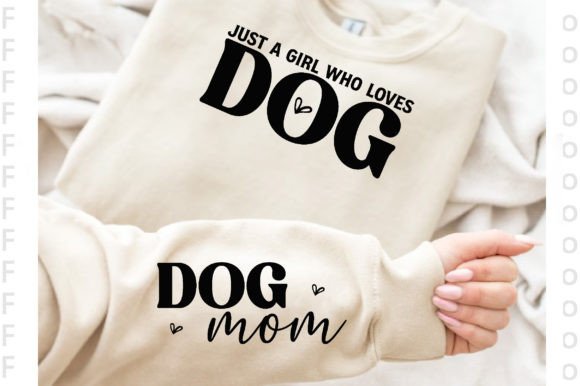
Just a Girl Who Loves Dog Sleeve SVG, PNG
There is something special about wearing your love for your dog on your sleeve—literally. The Just a Girl Who Loves Dog Sleeve SVG, PNG design captures that sentiment in a clean, versatile format that works for everything from t-shirts to mugs, totes, greeting cards, banners, and more. Whether you are a small business owner building a product line, a hobbyist making gifts for friends, or a parent creating custom gear for your kids, this design offers a simple way to express that bond. But getting the most out of any SVG or PNG file involves more than just clicking download. Many people run into avoidable problems that affect quality, usability, and the final look of their project. Understanding those pitfalls beforehand saves time, money, and frustration.
What Makes the Dog Lover Sleeve Design So Useful
At its core, this design is a digital graphic file optimized for cutting, printing, and transferring. The ZIP folder you receive contains two versions of the design in four formats: SVG, DXF, PNG (300 dpi with transparent background), and EPS. That means you can use it with cutting machines like Cricut or Silhouette, with print-on-demand services, or with desktop publishing software for paper crafts, invitations, and decorations. The design works for men, women, children, babies, birthday girls, and ladies—making it a flexible asset for any creative project.
Because it is an instant download product, you get immediate access after purchase. No physical item ships, which is typical for digital files. That convenience, however, requires you to understand exactly what you are buying and how to handle the files once you have them.
Not Understanding the Difference Between SVG, PNG, DXF, and EPS
One of the most frequent misunderstandings is treating all file formats as interchangeable. An SVG file is a vector format, meaning it can be scaled to any size without losing quality. It is ideal for cutting machines and for designs that need to be resized frequently. A PNG file, even at 300 dpi, is a raster image. It works great for printing but will become pixelated if you enlarge it beyond its original dimensions. DXF is another vector format that many cutting software programs accept, while EPS is useful for professional design applications like Adobe Illustrator.
The mistake: Using a PNG where you need a vector, or trying to edit an SVG as if it were a layered Photoshop file. This leads to jagged edges, poor cuts, or unexpected results when transferring to fabric.
The better approach: Identify your primary use case before opening the file. If you are cutting vinyl for a t-shirt, use the SVG or DXF. If you are printing the design onto paper or fabric, the 300 dpi PNG is your best option. Keep the EPS as a backup for advanced editing in vector software.
Ignoring the Transparent Background Requirement
The PNG in this set includes a transparent background, which is essential for layering designs onto colored surfaces. A common error is assuming any PNG is transparent. Many free or low-quality designs come with a white or colored box around the artwork, which ruins the look when applied to a dark shirt or a patterned background.
The mistake: Not checking whether the PNG has true transparency before using it. This results in visible white edges or blocks that clash with the base material.
The better approach: Open the PNG in your design software and place it over a dark background to verify transparency. If you see any unwanted background, you can remove it using a graphics program, but starting with a file that already has transparency saves that extra step.
Forgetting to Check File Compatibility with Your Machine or Software
Not every cutting machine or design program handles every format equally. Some older Cricut models may prefer SVG, while certain Silhouette software versions work better with DXF. If you try to import an EPS into a program that does not support it, you will get an error message or a blank canvas.
The mistake: Assuming that because you purchased a design, it will work seamlessly with your setup. This can lead to frustration and the mistaken belief that the file is defective.
The better approach: Before downloading, check the product description to confirm the format list. Then, test the file by importing it into your software as soon as you download it. If you need a different format, many vector conversion tools are available online, but starting with the right format is always easier.
Overlooking Resolution and Size for Print Projects
The PNG files in this set are 300 dpi, which is the standard for high-quality printing. But resolution alone does not guarantee a crisp result if you stretch the image too large. A 300 dpi PNG that is only a few inches wide will look excellent on a greeting card but may appear soft or pixelated on a full-size poster.
The mistake: Enlarging the PNG beyond its native dimensions in your layout software without understanding the resolution limits.
The better approach: Use the SVG or EPS vector format for any project that requires scaling to a large size—such as a banner or poster. Vectors can be resized to any dimension without quality loss. If you must use the PNG, keep it at or near its original size. When in doubt, test print a small section first.
T-Shirts and Apparel
For heat transfer or sublimation, the SVG is your go-to format. Weed the design carefully, and make sure you mirror the image if your transfer method requires it. The design works for men, women, children, and babies, so you can create matching family outfits. Avoid the temptation to use the PNG directly for cutting vinyl—vector formats produce cleaner cut lines.
Mugs, Totes, and Hard Surfaces
Sublimation blanks require a PNG or JPEG at 300 dpi. Because the PNG in this bundle has a transparent background, you can place the design anywhere on the surface without a white box. Check the color profile of your printer to ensure the black and white areas transfer as intended. For adhesive vinyl on mugs or totes, stick with the SVG for precise cutting.
Paper Crafts, Greeting Cards, and Scrapbooking
The 300 dpi PNG is perfect for cardmaking and scrapbooking because it prints cleanly on matte or glossy paper. You can layer it with other elements, resize it slightly, and combine it with text. Because the design is intended for dog lovers, it works well for birthday invitations, thank-you notes, or just-because cards for fellow pet owners.
Banners, Posters, and Decorations
For large-format projects, always use the SVG or EPS. Printing a raster PNG at banner size will reveal pixelation, no matter how high the original resolution. Vector files keep edges sharp at any scale. If your print shop requires a PDF, you can export from vector software easily.
What to Check Before You Buy or Use the Files
- License terms: Digital design files often come with usage limits. Confirm whether your intended use—commercial, personal, or both—is allowed. This protects you from legal issues and supports the designer.
- File organization: The ZIP folder contains multiple files. Unzip it on your computer and take a moment to rename the files with descriptive names before you start working. This prevents confusion if you purchase multiple designs later.
- Software readiness: Make sure you have the appropriate software to open each format. Free options like Inkscape (for SVG and EPS) or GIMP (for PNG) can handle most needs if you do not have paid tools.
- Design placement: Visualize where the sleeve design will sit on your final product. Scale and position it within your software before cutting or printing to avoid wasted material.
- Test cut or test print: Always run a small test on scrap material before committing to your final product. This catches any sizing, alignment, or color issues early.
Why Quality Matters More Than You Think
The product description emphasizes 100% quality work, and that is not just a tagline. A well-crafted vector file has clean nodes, consistent line weights, and proper layering. A high-quality PNG has no compression artifacts, accurate transparency, and correct resolution. When you start with a quality file, your final product looks professional, and you avoid the frustration of redoing a project because of a flawed design.
Conversely, a poorly made file can cause weeding failures, blurred prints, or misaligned cuts. Even experienced crafters can waste hours troubleshooting a bad file. That is why checking reviews, examining the product description, and understanding the format differences are so important before purchasing.
Practical Tips for Beginners Approaching This Design
If you are new to using SVG or PNG files, you do not need to learn everything at once. Start with one format that matches your immediate project. For most people, that is the SVG for cutting machines or the PNG for printing. Watch a quick tutorial specific to your software or machine. Many common errors like incorrect scaling, missing layers, or wrong file format are easily solved once you know what to look for.
Keep your downloaded ZIP folder organized on your computer. Create a folder for each design or project, and store both the original files and any modified versions separately. That way, you always have a clean backup if you need to start over.
Maximizing the Versatility of This Design
Because the design works for babies, birthday girls, women, men, and children, you can use it across multiple products in a single product line. A small business owner could offer onesies for babies, t-shirts for adults, tote bags, and greeting cards all featuring the same design. That consistency builds brand recognition and saves design time. For personal use, you can create coordinated party favors for a dog-themed birthday party or matching shirts for a family photo session with your pet.
The transparent PNG also makes it easy to combine the sleeve design with other graphics or text. Add a name, a date, or a short phrase to customize it further. Just keep the composition balanced so the main design remains clear.
Avoiding Common Download and Storage Missteps
Instant download products are convenient, but people sometimes misplace the files or fail to back them up. Your purchase is typically available for a limited download window, so save the ZIP folder to a cloud service or external drive right away. If you lose the files later, you may not be able to re-download them without contacting the seller.
Another oversight is not testing the files immediately after download. If there is an issue with the file itself, you want to catch it within the seller's support window. Open each format briefly to verify it opens correctly. This five-minute check prevents headaches weeks later when you are ready to start a project.
Understanding Design Limitations Realistically
No single SVG or PNG design can do everything. The Just a Girl Who Loves Dog Sleeve SVG, PNG is a sleeve-style illustration, which means it works best when placed on the sleeve of a garment or in a vertical orientation. Trying to force it into a square composition or a horizontal layout may require awkward cropping. Know the intended orientation of the design and plan your layout around it. If you need to rotate or flip it, use your design software, but be aware that text or directional elements may need adjustment after mirroring.
Also, because this is a two-file set (two versions of the design), you have options. Compare them in your software to decide which placement and size suit your product best. Often small differences in scale or detail make one version more appropriate for a mug and the other for a t-shirt.
Making Confident Decisions with Digital Designs
The key to getting great results with any SVG or PNG file is preparation. Understand what you are buying, match the format to your project, test before committing, and keep your files organized. The Just a Girl Who Loves Dog Sleeve SVG, PNG design is a well-made, versatile asset that can serve many creative purposes, from wearable items to home decor and paper goods. By avoiding the common mistakes discussed here, you will produce clean, professional-looking products that truly reflect your love for your dog—and your skill as a creator.
Whether you are making a gift for a fellow dog lover, building an inventory for your shop, or simply enjoying a weekend craft project, taking the time to handle your design files correctly will make every step smoother. The design is ready. Your tools are ready. Now all that is left is to create something you are proud to share.